
Portfolio

Back
2023 – present

Memcara

Cofounder and Chief AI Officer of Memcara. I joined as a researcher in 2023 and moved into the cofounder and CAIO role, where I lead agent user experience design and the engineering deployment of multimodal AI agents that support caregivers in long-term care facilities. These agents combine video analysis, EHR data, smart glasses, and chat-based just-in-time adaptive interventions (JITAIs). They include CareInsights, Family In The Loop, and CareWare, which integrate dementia-specific AI-generated insights and clinical context directly into caregiver workflows. They are currently deployed across more than a dozen long-term care facilities in the northeastern United States and extend the research from my PhD thesis into real-world care environments. I am also leading Wildkittens, a separate spinoff venture developing an AI-agent evaluation benchmark for long-term care.

Wildkittens

I am leading Wildkittens, a spinoff venture from Memcara, to develop an AI-agent evaluation benchmark for long-term care, similar to OSWorld v2. The effort draws on real-world care workflows to build realistic tasks and evaluate how well AI agents use evidence and context to support caregivers.

2025–26

Companion IQ

Cofounder and Chief AI Officer of Companion IQ, a startup building AI-powered companions that provide support and connection for seniors, post-surgery patients, and veterans. I led agent user experience design and development for personalized, longitudinal interactions on myaicompanion.org, our AI companionship and daily check-in platform for older adults: a warm, SMS-based companion that drives daily conversations about health, activities, memories, and mood. It serves 200+ daily active users. We raised over $1M in seed funding and have multiple ongoing partnerships and clinical trials, including with the Department of Veterans Affairs.

2026

Perspectives of People with Serious Mental Illness on Artificial Intelligence-Based Companions

I coauthored this Community Mental Health Journal paper, published in September 2026. Through a secondary analysis of focus groups at three supportive housing facilities, we explored how people with serious mental illness view AI companions. Participants saw potential for everyday support, while emphasizing privacy, personalization, and design grounded in lived experience, alongside concerns about overreliance.

2026

My AI Companion: Feasibility, Acceptability, and Preliminary Effectiveness

I coauthored this JMIR preprint on a one-month pilot of My AI Companion, a text- and call-based intervention for adults with serious mental illness and chronic medical conditions. Nine people enrolled and seven completed follow-up. The study examines engagement, acceptability, and early changes in mental health and self-management; its small sample and lack of a control group mean it does not establish effectiveness. Posted August 2026; not yet peer reviewed.

2026

Voices of Users: How Individuals with Serious Mental Illness Perceive Artificial Intelligence Technologies

An abstract presented at the 2026 Health Care Systems Research Network annual conference and published in the Journal of Patient-Centered Research and Reviews.

2026

Utilizing Artificial Intelligence for Suicide Risk Detection: Differences in Older Adults

I was an equal-contributing author on this 2026 commentary in the Journal of Technology in Behavioral Science. We examine why AI models for suicide-risk detection need to account for older adults’ distinct experiences and symptoms, and propose age-specific validation, narrative context, and participatory design to improve their relevance and responsible use.

2025

CareInsights: AI-Enabled Infrastructure for Person-Centered Dementia Care

Our paper "CareInsights: AI-enabled Infrastructure for Person-centered Dementia Care in Resource-constrained Facilities" was accepted at IMWUT 2025.

2025

Family In The Loop

I presented the paper "Family In The Loop: Enabling Family Involvement and Person-Centered Dementia Care at Long-Term Care Facilities with Collaborative AI Tools" at CSCW 2025.

2025

Collaborative Meaning-Making in Networked Learning Environments

I presented an early sketch of a new learnersourcing framework I developed at Learning @ Scale 2025.

2024

Teaching AI in Extracurricular Contexts Through Narrative-Based Learnersourcing

I was first author on the paper "Teaching artificial intelligence in extracurricular contexts through narrative-based learnersourcing" at CHI 2024.

2021

Software Engineer, YouTube

I worked at YouTube, within Google, from March to August 2021, as a full-time software engineer on the Paid Digital Goods team, working in TypeScript and C++. I was part of the dozen-person team that built the "Super Thanks" crowdfunding feature, which lets viewers support a creator directly on any video, provided the creator enables it and the video is eligible for monetization.

2018–21

Software Engineer, Lark Health

I worked at Lark Health from October 2018 to February 2021, helping build what was, at the time, the world's largest AI healthcare provider. We focused on personalized, holistic AI health coaching for patients at risk of chronic disease. When I joined I was one of two mobile engineers with full-stack responsibilities; I led the transition of our app to React Native and refactored our backend to use microservices. During my time at Lark, the company tripled in headcount and raised a $70 million Series C.

2015–16

Software Engineering Intern, Google

Two internships, on the AdWords (Dart/Angular) and Knowledge Graph (Java/C++) teams.

2014

Software Engineering Intern, PayPal

I designed and implemented a dashboard and other internal tools as an intern on the Core Payments Team.

2011

Mechanical Engineering Intern, Makani Power (now Google X)

I helped manufacture high-altitude wind turbines and self-guided kites, working in SolidWorks and on the tools in the workshop.

2019–22

Workshop leader, TUMO

Designed and taught high school courses on AI and interactive storytelling in Berlin, Beirut, and Yerevan, covering minimax search, neural networks, and style transfer. The storytelling series was run with my sister Sophia.

Curriculum advisor, TUMO Self-Learning Initiative

Over the summer of 2021 I advised on the AI and CS curriculum for a new TUMO initiative: a fast track for upskilling young Armenian professionals entering industry. The project was sponsored by the European Union for Armenia, among other organizations.

2021

Mentor, UC Berkeley Fung Fellowship

I built a partnership between AbilityHacks and the Fung Fellowship, U.C. Berkeley’s entrepreneurship and innovation program. As a sponsor mentor I advised two student teams building technology to help people with visual impairments navigate cities.

2020

Mentor, Stanford CS + Social Good

I was Lark’s representative for a two-quarter design studio at Stanford’s CS + Social Good, mentoring students on d.school methods and how to build technical projects that matter. I later organized a partnership between AbilityHacks and CS + Social Good, and returned as a mentor in the 2021 winter and spring quarters.

2020

Section leader, Code in Place

I was a section leader (TA) for Code in Place, a free, open-enrollment version of Stanford’s introductory CS course, built for the circumstances of the COVID-19 pandemic.

2014

E-Challenge Coordinator, BASES

I planned the E-Challenge, a $150k startup competition.

Junior Class President, Stanford

I attended administrative meetings and planned campus-wide events, including our class formal on a boat and Full Moon on the Quad.

2012–16

Founding member, Stanford Competitive Running Club

I helped found the club and have been part of the Stanford running community since 2012, competing in NIRCA national club championships, an Ironman triathlon, and hundred-mile relays.

2023

Dartmouth Digital Health Summit, third place

2022

Millett G. Morgan Fund Fellow

2021

Dartmouth Innovation Fellowship

2021

Armenian Professional Society Scholarship

2017

Stanford Teaching Honors

2012

Eagle Scout

2011

Intel ISEF, third place, Physics and Astronomy

For a predictive model of standing wave patterns in plasma, built from my own high-speed photography of neon signs. The work also won an American Vacuum Society Award and a full-tuition scholarship to Drexel University.

Facet

Corporate meetings are often inefficient and biased, which my CS210 senior project team confirmed through user research at large software companies: "too many inefficient and biased meetings" was a frequent complaint. We built Facet, a smart assistant that facilitates and analyzes them.

NavCog and AbilityHacks

With AbilityHacks I did HCI research and engineering on disability-related challenges, leading the continuation of NavCog — a project that began in CMU’s Cognitive Assistance Laboratory and passed to AbilityHacks in 2020.

Smart Primer

Early work under Dr. James Landay on the Smart Primer Project, a tablet-based intelligent tutoring system for children that draws on narrative, chatbots, real-world activities, and a child’s physical and educational context.

Creativity boosting environments in cars

Research with the Volkswagen Automotive Innovation Lab at Stanford, with Dr. Elizabeth Murnane and Dr. James Landay, on increasing creativity during the daily commute. It investigated how in-car agents might guide drivers and passengers through creative activities and draw out new ideas, safely and enjoyably.

Adversarial Examples for NLP Contexts

My colleague and I developed two methods for generating adversarial examples for an NLP task, including a new loss function for training word vectors in a CBOW model. Final project for both CS221 (Artificial Intelligence: Principles and Techniques) and CS224N (Natural Language Processing with Deep Learning).

Visuomotor Learning: Object Classification

My team built a CNN for Amazon's robotic-arm pick-and-place task. It trains on large amounts of generated data — multiple camera angles, many scenes — to improve existing models on the real task through transfer learning. Final project for CS230 (Deep Learning).

Video tagging using frame captions

My team extended state-of-the-art CNN image captioning to a video tagging task. Final project for CS229 (Machine Learning).

Finding protests in social media

My team used CNNs to identify protest images on Chinese social media that are likely to be censored. Final project for CS224N (Natural Language Processing with Deep Learning).

“Can you take my photo?”

A lightweight guidance system that helps a stranger capture the shot you wanted. Final project for CS376 (Research Topics in Human-Computer Interaction).

Pensieve

My team made an app for sharing memories with loved ones at specific moments. Final project for CS247 (Human-Computer Interaction Design Studio).

Rally

My team made a mobile web app for people to connect with friends and plan activities. Final project for CS147 (Introduction to Human-Computer Interaction Design).

A general game playing agent

My team made a Java prop net GGP player with performance boosts from factoring and latches. This program made it to the semifinals of the end of year class competition. Final project for CS227B (General Game Playing).

CS106B Recursion Competition, Grand Prize

Connect Four with an AI opponent — my freshman-year entry to the 2013 competition in CS106B (Programming Abstractions).

CS106A Graphics Competition, Grand Prize

A platform for creating, manipulating, and visualizing multidimensional shapes — my freshman-year entry to the 2012 competition in CS106A (Programming Methodology).

Stanford Change Labs: water catchment for rural India

Mechanical engineering and design research with the 100 Liter Water Project at Stanford Change Labs, where I designed a sun-tracking solar power supply.

Archaeology research at Chavín de Huántar

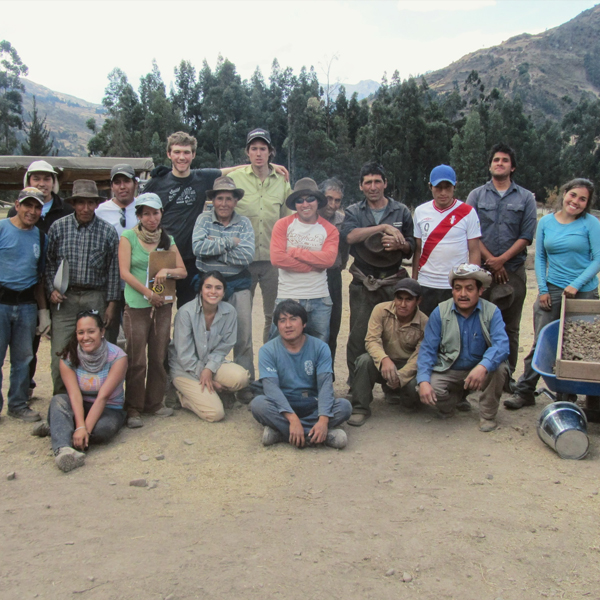
Stanford researcher on a small team that located a buried ceremonial chamber over 2,500 years old at a UNESCO World Heritage site in the Peruvian Andes. 700+ hours of field and lab work.

Sustainable Amazon ecotourism

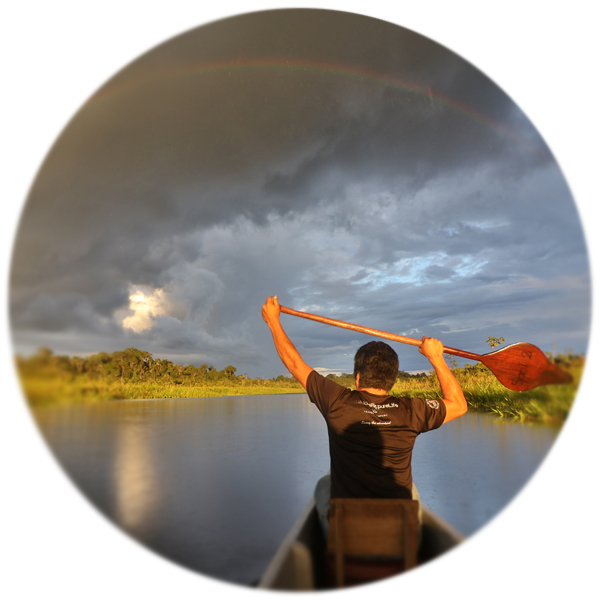
60+ hours of interviews with experts and members of Quechua and Waorani communities in the Amazon basin and cloud forests of Ecuador, supported by Stanford BOSP and Dr. Margaret Fuller.

Call center audio transcription and analytics

I built the audio transcription and conversation analytics prototype for an early-stage political polling startup.